Interview with Margaret Bowling – Expedition Manager and first Aussie women to row an ocean.

1.For all those who want to follow in your footsteps, how did you become an expedition manager….university degree/extra curricular activities/work experience…the lot?

In 2008 I formed Team EPIC, a team of mad, bad and dangerous to know adventurers. An initial failure to find sponsorship for a Greenland Icecap race led to a last-minute scramble to pull together an alternative expedition, an independent ski traverse of Greenland. We managed to get everything in place before I realised that I couldn’t actually afford to go. (Funding is the perennial bug bear of all adventurers!) So, much to my dismay, Birdy, Niall and Muzz set off without me while I sat at home and became their one woman support team. After the trip was over I realised that all of the work I’d done to set up the team, coordinate logistics, source kit, set up a website, do PR, manage sat comms and generally try to get everything running as smoothly as possible had potential as a proper job and not just a hobby. I still think that if I had gone on the trip I probably wouldn’t be doing what I’m doing today so it was probably a blessing in disguise.


2. You specialise in polar and ocean expeditions, have you tried all the other stuff, running, climbing etc and then settled on your two favourites?

I love all wild environments but feel most at home on, in or near the water and have an incredible draw to the ice that I just don’t have to mountains and deserts. But just because I don’t make certain expeditions a personal goal doesn’t mean I don’t enjoy helping other people with them. This year I’ve done support for a RAAM cycling team and worked with two separate teams on ultra triathlon style events that incorporated cycling, rowing and climbing mountains. I loved every minute of it. After all an adventure is an adventure no matter where you have it!

Margaret Rowing

3.In your job, you plan everyone else’s expeditions, what about your own? Is it a case of all the hardship and none of the fun or is this your inspiration to get out and do your own?

Planning other people’s expeditions puts you in touch with people who inspire you to dream bigger and better for your own expedition. And you make the contacts that get you access to the resources needed for a successful expedition, which makes doing your own so much easier. It also puts you in pole position for some incredible opportunities. Last December I was given a free seat on a pay-per-place Atlantic ocean rowing team after they lost someone to injury just before they were due to depart.


4.What is your favourite part of planning an expedition?

The thing I love the most is helping people find the outer boundaries of what is possible. This comes in many forms. Sometimes it will be advice on logistics so they can reach a certain point during an opportune weather window. Other times it will be sitting down with a map and the seed of an idea and looking at what is the biggest and boldest thing we could turn that idea into. And other times it will be putting them through their paces at 4am in the morning after I’ve already been working them into the ground for the past 24hrs. The common thread is about pushing the boundaries of possibility.


5.Why did you choose to live like you live as opposed to following the more traditional route?

My formative years were somewhat different to most people’s and they left me with very itchy feet and an aversion to the 9 to 5 life. Growing up I was dragged off to an Indian ashram (read hippy commune) most summers. And when I was 10 my parents bought a fold down caravan and a station wagon and took us on a 14-month tour of Australia that involved very little school and lots of fishing. Then, aged 17, I spent a year in Italy on a student exchange programme. And the rest is history.


6.Rowing is quite a random sport (in Ireland anyway) Sell it to me. What is the appeal and how did you get into it?

I started rowing dingys around the bay with my Dad as soon as I could walk so rowing was an obvious sport to choose when I started high school and I’ve been doing it on and off ever since. A proper rowing race has been compared to giving birth. It’s just as painful and just as rewarding. Rowing is about committing to a team, committing to completing a race, committing to training and committing to that awesome feeling you get when you win. There’s nothing like it.


7.I am quickly noting that for a big niche, the adventure sports elite (you, Dave Corn…) all seem to know each other, everyone is linked. It’s pretty awesome to see actually! Do these people (other adventurers) become your core group of friends or is it still people from back home?

Other adventurers, especially the ones who are social media addicts like me, quickly become firm friends. But our relationships with each other are largely virtual and we don’t meet as often as I’d like. The  adventurous friends I spend most time with are all ocean rowers and polar explorers who I have been at the start of a race with or planned trips with. But I’m a very social person so I have close friends from all walks of life, not just adventures.


8. I swore I wouldn’t ask the female question but I am caving; how does it feel to be a women in a so called ‘men’s’ area? Or have you ever even noted it like that?

I feel it often. It’s the elephant in the room. Nobody talks about it but all of the female explorers I know feel the same. This is not an equal game. You have to work twice as hard to gain respect from your peers and it’s very hard to be the most resourceful person you can be when our society encourages you to ask men for help at every turn. On my first ocean row everything that could possibly go wrong did and we fixed it all ourselves. Despite this I still find myself looking hopelessly at my male counterparts and asking them to do things for me. I know that if they weren’t there I could probably do it myself and it’s just social norms getting in my way. So women (myself included) can be their own worst enemies. My solution is to do as many expeditions with women as I can so that I can achieve my full potential just as much as I did on that first row.


9.Your CV is mind blowing; The Celtic Crow Conquest, The Trip to Remember, Ride for your Lives etc. Do you ever read it back and think, holy shit I’m good?!

As an ex competitive rower who decided she was up to tackling some of the biggest challenges in the world today I’m not going to lie and pretend I have a small ego. The answer is yes, sometimes I do think that the things I do are pretty awesome. But mostly I’m doing them because I can and not because I want to massage my already over inflated ego. Just because my version of what I ‘can’ do is very different to most people’s doesn’t make me better than them and I hope that everyone has a ‘fuck I’m awesome’ moment every now and then.


10.Is your job just a job at the end of the day or is it your life?

I still work in TV a lot so it’s not my whole life. But when I manage to make some money out of doing something that feels like it should be a hobby it gives me a huge amount of satisfaction. Isn’t that what we all want, to live to work instead of working to live?


11.Heads up, big up in the air question coming, What is your aim/goal in life?

To be good to others and hopefully it will come full circle.


12.How is it working for ‘Big Blue’?

Big Blue is a mixture of hard work and heady enjoyment. We’ve got out first expedition coming up next March and April and I can’t wait to spend a few months in the Caribbean with two amazing crews organising their rows from Barbados to Jamaica to Mexico. Getting it off the ground is taking up all my spare time but every time we sign up yet another incredible crew member I am reminded why I’m doing it. They’re going to have the adventure of a lifetime and I’m making it happen.


13..Do you still have your Aussie accent? -random question but since I moved over here (Edinburgh from Ireland) I’m practically defined for mine it’s so strong.

Yeah mate. Todally. Almost 12 years in and I’m still a true blue Aussie, albeit with a twist of English. Kind of like a good cocktail.


14.Finally, I’m going to ask you the same question as I asked Dave as I figure the more opinions on it the better:

This question may seem rude but that is not my intention. It is just a challenge I am constantly facing and am wondering if you too have ever struggled with it? I am twenty years old and want to get into adventure sports journalism, but I am constantly confronted with people’s scepticism that this is a career that cannot bring about change. That as a smart girl, I should go into politics or war reporting. Change the world. Subsequently I am left feeling guilty about doing something I love? Any thoughts?

Most expeditions do a huge amount for charity. What would you rather do, report on how people are helping the world or how they are blowing it up and killing each other? The answer seems pretty obvious to me. And if the people around you can’t see that then ignore them until you can move to a place where you can surround yourself with people who are going to support you doing what you love and can see the value in it.

If you feel like you’re being selfish with your chosen profession (and let’s face it, what we all do is the ultimate selfish indulgence) then find ways to make it just as much about other people as it is about yourself. Don’t worry about being selfish if you can balance it out. I choose to find this balance by mentoring young people who want to break into adventure and exploration, which is one of the reasons I wanted to do this IV. I also spend lots of time giving people advice and helping them with their expeditions for free.


Margaret’s website: http://margaretbowling.wordpress.com/

Mark Beaumont’s Lecture:

Mark Beaumont‘s Twitter tagline reads; “Adventurer, author, expedition cameraman, speaker.” I think he should add marketing genius to that one. His latest talk took place Thursday night at the Royal College of Physicians, Edinburgh.  The selling point, ‘come to my talk, buy my book at the door for a reduced rate and I will sign it for you.’ Cheeky. But who am I to judge, I was the first in the queue and now I hold in my possession an autographed copy which the legend held and signed with a pen. By the end of the evening the queue was so long, it could have been a Justin Bieber concert, except on this occasion it was middle-aged men and women doing the blushing and giggling as opposed to 14-year-old girls.

Mark has circled the globe, all 18,000 miles of it and in a Guinness World Record speed.And oh boy, that makes for a good talk. It was a breath of fresh air in a host of talks that were becoming too similar in their tactics. Mr. Beaumont took a different, less explored root. Fitting for him I suppose. He talked about the reality, the pain and hardship involved and the before part that no one ever gets to hear.

In truth, it was hard work. The expedition took two years to plan to perfection, then it took another year and a half to convince the media and the sponsors that he could actually pull it off. He admitted quiet a scary truth; in order to keep going during feats like this, your whole mind-set must change, after years of being told this is the way you have to think, now in order to succeed you must get completely lost in the here and now. However if this works, “It is a wonderful feeling.”

He talked of the importance of documenting the experience. The storytelling reminded him to enjoy it, to value it. Without that aspect he questions if he would have made it. He  scaled the vastness of the trip back and showed us its bones, the everyday problems and what he learned. In Iran for instance, the truth is very far off from how the media has painted it. It is simply a communication problem, both sides mistrust the other side. The Iranian cycling Federation even joined him for a pedal. His life was stripped down to a very black and white status. Survive. If he could find the basics each day; enough food to ease his 6,000 calorie a day requirement and a safe place to sleep, then all was well.

Then, somehow, quite astonishingly he made it home. He crossed the finish line like a Tour de France winner by the Arc de Triomphe. He had lived out his dream.

Mark Beaumont - Courtesy of the BBC archives

Now, you want to know the good stuff, the facts that made this achievable. Mark Beaumont trained at a far higher intensity before the trip then when he was actually on route. He combined cross training with sprints. When he finished the race, he had no perspective, it took him three weeks to float down and absorb his achievement. He says; “You prepare yourself to go, you don’t prepare yourself to come back.” With regards to packing, if you don’t use an item for two weeks, send it home. He used a  Koga Miyata bike, and installed disc brakes as opposed to rear brakes to make the tyres last longer. When asked during the Q&A session  if he listened to music, his response was that the music’s beat punctuates time, to succeed you need to zone out, but music will keep bringing you back. So music was a luxury to be used sparingly.

A person has already broken his record but he will not endure it again. “There so much other stuff to be done”, spoken like a true adventurer.

The lecture was hosted by the World Cycle Challenge; “the only fully supported cycle around the world.” There is no need for me to sell it to you, it sells itself, 8 stages, 18,000 miles, 20 countries, 9 months, 24/7 support team and one life changing experience. Are you dancing on the spot right now, getting sweaty with excitement? I am afraid I will have to ever so cruelly kick you now while your guard is down. It will cost you, £34,000.


£34,000

Breath.

The redeeming factor is you can do a stage of it:

Stages 1: London – Istanbul

2.Istanbul – Lahore

3.Lahore to Calcutta

4.Bangkok – Singapore

5.Perth – Sydney

6.Christchurch – Auckland

7.San Francisco – Miami

8.Lisbon – London


So far nine people are signed up. In his attempt to put the cost in perspective. Mark’s unsupported round the world trip cost the bones of £24,000 and it costs more, apparently to climb Mount Everest.

So are you in?

My Daddy the Cyclist

Daddy on the Bike

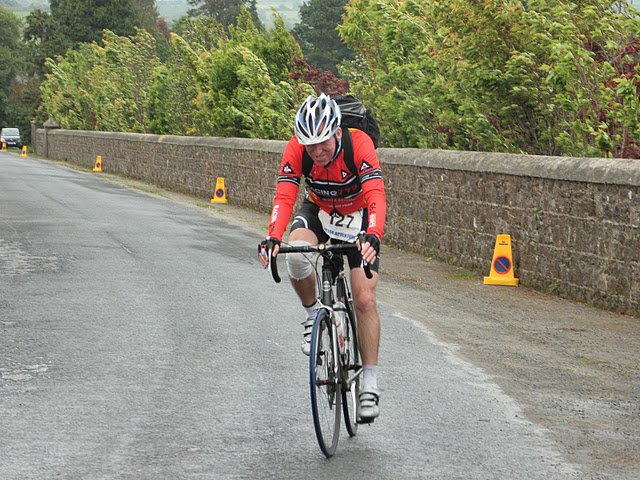
It is an impressive sight; the cyclist’s peloton, so organized, so smart, pedaling in sync along their preplanned route. The heads are down, the matching uniforms are on, their sleek racing bikes working together like a machine. All its riders are effectively anonymous, disguised in their superhero gear.

Then one by one they turn off towards home. The team of riders gradually diminish and what I am left with is my fifty year old father with helmet hair, beads of sweat trapped between his wrinkles and misplaced clingy Lycra revealing a whole lot more of my father then a daughter should ever be privy too.

My father is a cycling Dad and they are a certain genre of people. They like to wear tiny clothes. They like to always have a stubble to give them that rugged outdoor demeanour and they love their bike more than their own children!

Da’s cycle may not be until 4pm but he is suited up in his lycra shorts, neon jersey and yellow super specs by 9am. He puts on his special shoes with its pedal clefts and walks around the house for hours on his heels so as not to damage them. He retrieves the bike from the garage where it is hung on the wall, high up so as his children cannot harm it. Then he parades around the yard pretending he is Chris Hoy or Nicolas Roche, sucking in his flab and thinking he is shit hot. He is not.

The appeal of the gear is that it does not hold water and it is less wind resistant than say a tracksuit. The Lycra acts as a second skin to prevent chaffing and its tightness lends support to your muscles. For maximum effect it is to be worn without underwear. Why god, why?

My father added; “The padded pants keep our piles in place, and if you don’t have piles, cycling will soon sort you out.” Charming.

Instead, my hypothesis, based on years of observation is that they wear it because it makes the old men feel like the pro’s and it makes the young lads parts look bigger.

On several occasions, I have had the privilege of leading my friends into the house and having them burst their shite laughing at my Dad pulling a Michelangelo’s David pose in his cycling gear. Now, I can handle it, at sixteen though it was just cruel.

The best is when Aldi and Lidl have a limited time cycling sale and I get to accompany him. Queues of middle aged men can be seen fighting over tight neon tops, the likes of it wouldn’t be lost at a gay pride parade. I park the car and get the trolley while he dives into the tussle.

Yet it is amuses me to the point that I wouldn’t  change it even if I had that sort of power. It provides my family with hours of entertainment and a constant material for jeers. However, if he dares to progress to the pointy helmets that shaves milliseconds off your riding time at the sacrifice that you look like you got your head stuck in a bedpan, or begins to shave his arms and legs so as he is more aerodynamic, then I am out of here.

Therefore, fathers listen up and listen closely if you have children young or old, save the Lycra for the saddle. Once you dismount the bike, cover it up, we will all thank you for it!

Rat Race – Urban Gym, Edinburgh

What a simple yet genius idea. Taking the gym to the streets. Taking the routine of running slumped over a treadmill, IPod taped to your ears, eyes listlessly stalking the mute TV on the wall and introducing  you back to the world of outdoors.

Edinburgh’s Urban Gym has regrouped and restyled and its going to be pumping. There is no way this cannot work and work successfully. Racing around the cobbles, breathing out mist, laughing, and sweating with similar minded people. At the minute the group assembles at 6.30pm at Castle Terrace every Tuesday and Thursday evening, but as it grows in popularity, surplus days will topple on.

For a fee of £29 a month, you get to race, you get to make friends, you get to enjoy the benefits of a personal trainer telling you what to do. Over a pre-planned route, the coach Kyle Farningham, gets to lead you on a mini adventure, stopping at various points along the route to beef up those muscles with splashes of circuit training.

The beauty of it lies in the casualness of it all. The streets of Edinburgh are relatively empty, lit only by streetlights but  when 6.30pm chimes people fitted in their jogging gear carrying nothing but a bottle of water emerge from the shadows and meet in the centre. Then off they run.

You pass people all dolled up, setting off for a night on the beer, or in their suits returning home from a day at the office. They turn and watch as you struggle to do push ups against a railing in the middle of the city. Yet somehow you do not even notice them, and you certainly do not care. Because you are on a high. The crisp air, the salty skin, the goose bumps, the lycra, the laughter, the panting, the run. It is a beautiful sight to behold, a slice of freedom in the city.

Interview with Dave Cornthwaite


Dave Cornthwaite is a British adventurer, author and motivational speaker.

1.Does the job of an adventurer/author and motivational speaker go hand in hand? Was this your childhood dream job?

It definitely wasn’t something I considered doing when I was younger, I just didn’t know it was possible. I don’t really see it as a job because I’m passionate about everything I do and it’s too much fun to be work! The speaking is a part of any professional adventurer’s life, especially if like me you’re not regularly on TV. All of this stems from my love of writing, it’s so nice to have stories to turn into books these days.

2. What was your very first adventure?

In April 2006 I skateboarded 896 miles from John O’Groats to Lands End, I was the first person to skate the length of Britain but that was just a warm-up for Australia!

3. The sheer scale of your adventures seem daunting, are they daunting to you or just the rest of us?

I understand how they might appear daunting, but having done a few I now realise that dealing with the distance is just a state of mind. However slow you go, if you keep going you’ll make it to the end if you want to – and that’s the key, I’ll only do these journeys if I really really want to, otherwise when it gets hard I’d give up.

4. I see you travelled while at university, how did you balance both lives, not just work but friends and a part time job?

I think travel is the best education we can get. We can’t understand our place in the world without seeing it from the outside, so I made the most of my time at uni, worked hard and travelled in my holidays. Good friends don’t mind if you go away, they’ll be waiting when you come back!

5.When you have to stay put for a set period of time, how do you satisfy the travelling bug or the urge to keep going?

The hardest bit about what I do is in between adventures. It’s easy to be motivated when I’m on a journey, I’m focussed on reaching my goal and also sharing my trip. But in between I need to write books, do a lot of talks and earn some money for the next trip and it takes a lot of dedication. Usually I need a while to let my body recuperate after a big trip so it’s a natural process leading up to the next one.

6. You make it all sound so easy; you graduated, founded your own newspaper and became a graphic designer. They are three different jobs that people study their whole lives to become, yet you seem to have managed to excel at all three. Props to you but how?

Simply, I just did it. I had the idea and rather than talk about it I just put the wheels into action. I taught myself new skills as quickly as I could – everything is based on common sense so I listed the things I needed to do to achieve my goals and then started ticking them off until I’d done it. It wasn’t simple and took some hard work, but I made it happen pretty quickly. Anyone could do it!

7. When you decided to commit fully to adventuring as a career, was there a fear of failure, of giving up an easy life? Or do you even believe in fear?

I believe that we’re fearful of change and difference, and the reason we’re so scared of it is because deep down we’re considering that change, and it’s a good thing, but for a while it might not be easy. People love comfort but comfort kills ambition, so I keep generating new ideas everyday to avoid getting in a rut. All I ever wanted to do was make a living from something I’m truly passionate about, I didn’t have a specific aim or goal but I knew it was possible if I worked hard. I’m still learning and figuring things out, but I’ve not considered dropping adventure. I couldn’t imagine doing anything else, that’s the key to finding your true vocation.

8.Your a long boarder right, what is it like having one leg permanently more muscley than the other?

Haha, I don’t skate much anymore but after my journeys my right calf was huge! It was my party trick!

9.Why did you start it all, were you just bored?

I was boring! I’d followed everything that’s expected of all of us. Schools, Uni, Degree, Job, Mortgage, Partner, Pet. It wasn’t until I was 25 that I realised I was unhappy. I ditched everything and started afresh. I’d been depressed, living the same life everyday, I needed change.

10. How do you think of new adventures?

If I try something new that’s fun I’ll instantly start think about travel. Each method of transport I use exercises me somehow, add that healthy activity to travel and suddenly Im going to see a new part of the world and get fit at the same time. It’s a beautiful process.

11. Is a life of exploration not a lonely one?

I rarely feel lonely on my adventures. I meet a lot of people on my way, although it’s hard saying goodbye to new friends constantly. Honestly, I find it lonelier coming home. Sure, I see my friends and family, but nobody truly understands what you’ve been through, no matter how much you talk about it.


12.When in all this chaos did you have time to write a book?

It takes dedication. I need to give myself time and rid myself of all distractions. Not easy when the book-writing time is also money-making time. I’ve taught myself to believe that one day my books will be my income, my pension even. That way I survive on very little in order to finish a book.

13. What is your all time favourite book?

I don’t have one. Depending on my mood I’ll flit from one style to another. I love writers like Bill Bryson for their humour and wit. Reading Hemingway makes me want to write. I just love books, they’re a sign of hard work and dedication, nothing like walking into a bookshop and thinking about everything that went into the books – so many stories, just brilliant. It’s inspiring. If they can do it, I can! You can!

14.You found a purpose pretty early in life compared to most people, I bet that feels nice?

Sure it feels nice. It saddens me when people go their whole lives without finding a purpose, we’ve all got talents, every one of us. Sometimes we’re not lucky enough to have someone else to nurture our talent so we have to be prepared to nurture ourselves.

15. This question may seem rude but that is not my intention. It is just a challenge I am constantly facing and am wondering if you too have ever struggled with it? I am twenty years old and want to get into adventure sports journalism, but I am constantly confronted with people’s scepticism that this is a career that cannot bring about change. That as a smart girl, I should go into politics or war reporting. Change the world. Subsequently I am left feeling guilty about doing something I love? Any thoughts?

Here’s the crux of my answer: If we are passionate about something we can enact change. There’s nothing like passion to inspire. If I was a chicken farmer and LOVED it, found beauty in the science and biology and the life and the eggs and the EVERYTHING, then my articulation of that would inspire people. I’m not, obviously, but adventure sports journalism can inspire in so many ways! Forget the doubters, what do they know? Is the funny kid at school ever encouraged to be a stand up comedian? No, because it doesn’t fit in the typical box. Trust your gut, if it’s what you want, go for it. You’ll never regret a decision like that.

16. Do you ever worry about money ?

Rarely. I’ve survived on very little – incredibly little – for five years and everything I earn is ploughed back into my adventures. Wealth isn’t finance, it’s experience and the ability to use your time well. I’m pretty wealthy right now, without having a penny 😉

17.Do you ever worry about settling down?

It’s probably my only concern at the moment. I’ve chosen a lifestyle that isn’t typical, it sends me away and fulfils me but doesn’t make it easy for me to find a long-time partner. I’m not sure I’m the type of person to ever settle down, but a more settled base would probably complete the missing link in my life. That’s okay though, it’ll come, in time.

18. Do you ever get frustrated with people and the world?

Endlessly. Realistically though we can only do our best in everything. We have political and environmental problems that are juggernaughts, I can’t stop them so I won’t dedicate my life to a lost cause. BUT, what frustrates me most is people who have potential and don’t take advantage of it. Such a waste. Anyone I meet who moans about their job, I’m at them immediately, trying to work out how they’ve let it get to the stage where the one thing that takes up the majority of their waking hours isn’t pleasing. It’s a waste! We’ve only got so much time, why would anyone choose to waste it!

19.Was there a defining moment that made you leave a world of comfort behind?

I’d been aware that I needed a change for a few weeks but there was one catalyst that kicked everything into gear: my first ride downhill on a longboard. Riding a hill that I thought I knew gave me a whole new perspective. I was bursting with passion and joy. It was incredible, to be struck with the realisation that something so normal and ordinary to me could be shown in a new light. Two weeks later I quit my job.

20. How do you entertain yourself while on route?

Usually my surroundings are more than entertaining. But I’ll listen to an ipod, practice a brand new talk out loud – shouting and singing into the wilderness sometimes! – think of new journeys and projects. I can’t remember the last time I was bored!

21.What is your favourite sport and why?

My first passion was football, it’s a true international language – you can go anywhere in the world and make friends with a football.

22. Which has been your favourite adventure and why?

My latest one, Stand Up Paddling the Mississippi. SUP is a beautiful way to travel, it’s great for fitness and you can see so much standing on a board. It’s such a simple way to travel, too. Board. Paddle. Bags on top. And that’s it.

23.Whats next?

I’m writing my next book, it’s called Stand Up Huck, about the Mississippi paddle. In a few weeks, when I’m nearing the end of the book, I’ll settle on my next adventure. It might be a swim down a river, a sail journey, a unicycle…who knows?!


For information on Dave, here’s his website http://www.davecornthwaite.com/ , take a luck, trust me, the man is a legend.

Raise your Guinness to the best surf spot in Europe

Photographer Gary McCall

The clock tolls 6am. A phone rings in the mighty village of Bundoran in the North West of Ireland. The answering machine clicks into place and broadcasts the message to the sleeping household. “Get up quick, a massive swell is coming,” the voice of a local surfer, Ronan Oertzen floods the room. The surfers rise in hurried silence, they pull on their winter wetsuits, clasp their surfboards in hand and tear out the door into the frigid waters of the Atlantic ocean. There, they escape into blissful oblivion, where it is just them and their board, alone in the vastness of Ireland’s angry waters, relying solely on their skill to tame the waves. This is surfing. Beware, if you try it once it will hence forth consume your life.

Ireland is rapidly becoming recognised for her quality barrels and it will remain up there with the Aussies and Hawaiians legendary surfing statuses for one reason. It is different from everything that they offer. According to DiscoverBundoran, the local tourism board; “Whilst it’s not the tropics, when it pumps, there are few places you’d rather be.”  It is cold water surfing which requires serious guts in comparison. If you fall off your board in Australia, you will land in a jacuzzi. If you fall off in Ireland, you will land in a tub of ice-cream. The Atlantic hosts an average temperature of nine degrees Celsius, usually combined with a forecast of substantial winds and torrential rain. So when you are out scaling the cliff edges in search of the good spots and are padded in a 5mm thick neoprene wetsuit, booties, gloves and hood. Remember, Ireland has earned the right to call her surfing extreme.

Bundoran, County Donegal is offering you waves on demand year round, accommodating for both beginners and pro’s. “The North Atlantic in winter is the most prolific swell generating area on the planet so with a little imagination waves can be found almost every day,” according to magicseaweed.com, the surfing forecast website. The rush is in the chaos of riding a board while mother nature attempts to take you down. If dread has began to creep in, never fear it eases up a notch over the summer and you can catch some epic, clean waves.

The town has hosted an array of international surfing competitions. This summer it pulled off the European Surfing Championships, ‘Eurosurf Bundoran 2011’ for the third time. A ten day party for surfing evangelists, which transforms the little town into a makeshift city with a pumping atmosphere. Two thousand spectators clad in jumpers and raincoats set up camp at Tullan Strand to watch the action. “It’s just amazing to watch the cream of Europe’s surfers right there on our doorstep for a week and see some world class surfing,” says Shane Smyth, the Eurosurf press officer . There is something mystical about going surfing in Ireland; the un-crowded beaches sitting against a backdrop of mountains and costal roads. Shane coins the appeal as “a certain romanticism.”

Ronan Oertzen of the Irish surfing team recalls the event; “The atmosphere between the teams was great and electric when one of us were competing in a heat. There was some great surfing in the Eurosurf this year and the waves that we got where world class, it is so rare to get such quality surf in a comp. This one is going down in the history books for sure. ”

Events clustered around a surf theme are held regularly by the local surf schools. In June there is the annual Sea Sessions a combined surf, skate and music festival which promotes home grown musical talent like The Villagers and BellX1. The surfing  aspect of it sees Europe’s finest  pitted against the best Ireland and the UK can offer. Then running through the year, you have got some pretty retro options to choose from, including surf and yoga retreats, surfing and English language programmes, intensive training sessions, surfing stags or hen nights and obviously parties galore.

Surfing holidays in Ireland are not just about the waves. It is the aftermath, retiring to the local pubs wrecked and exhilarated after a day battling the surf. It is the warmth of the people, the strange accent and the ‘craic’ that makes Bundoran worth braving the weather.

 Information panel:

Boards can be hired out for the small fee of €20 for the day. This includes wetsuit rental.

However if you want to learn the trade, there are four main surf schools/lodges to choose from; Bundoran Surf Co. (www.bundoransurfco.com), Turf and Surf (www.turfnsurf.ie) , Donegal Adventure Centre (www.donegaladventurecentre.net) and Surfworld Bundoran (www.surfworld.ie)

If you are interested in heading to the Sea Sessions Festival, keep an eye out on its website; http://www.seasessions.com/lineup.html , it usually runs  late June.

For more information on things to do and places to see in Donegal, check out the DiscoverBundoran website (www.discoverbundoran.com)

Side Bars:

Top 5 Cold Water Surf Destinations:

1. Nova Scotia, Canada

2.Tasmania, Australia

3.Donegal Bay, Ireland

4.Essaovira, Morocco

5.Yakutat, Alaska

Gaelic Surf lingo:

ag marcaíocht na dtonnta – surfing

cé mhéad ar cíos do bhord surf? How much to rent a surfboard?

Cá bhfuil an trá? – Where is the beach?

Cá bhfuil na tithe tábhairne? – Where are the pubs?

go raibh maith agat- thank you

The Most Exciting Thing you have ever done -Kyle Farningham Interview

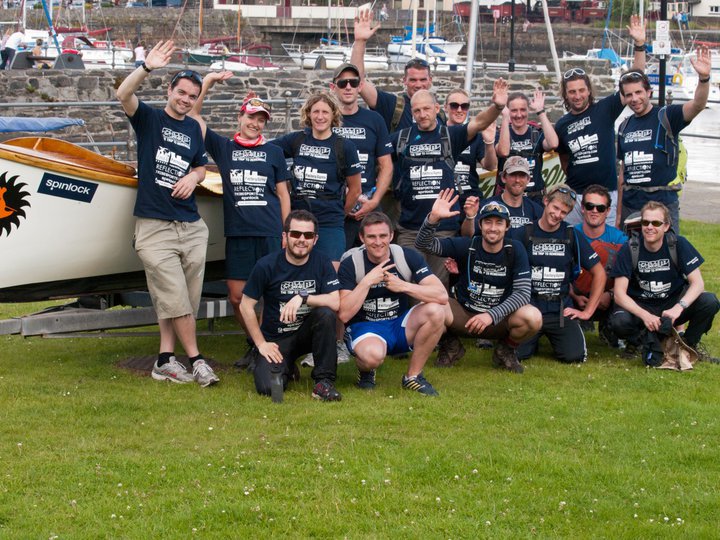
The most exciting thing you’ve ever done, people hate that question, I hate that question. We hate it because our answer is usually not that exciting and it forces us to admit that. That does not apply to Kyle Farningham. No, his answer made me smile, “The most exciting thing I have ever done would be the ‘The Trip to Remember ‘, a 45mile cycle from Dublin to Arklow, a 90mile row across the Irish sea from  Arklow to Portmagdog and a 15 mile hike from Portmagdog to the summit of Snowdon. I suppose that meets the criteria!

Kyle is a personal trainer and Rat Race Urban gym manager based in Edinburgh. This summer he decided to practise what he preached and applied as a crew member on “The Trip to remember” . He credits  the owner of the gym he works in with the choice of challenge. “His words, ‘You are mental enough.’ ” However it is one thing applying but a whole other kettle of fish to actually follow through.

On the 8 July 2011 he met his comrades for the next 36hours for the first time. They included Mark Cooper, famed with running Amsterdam to Barcelona, the equivalent of 50 marathons in 56 days. Mark Beaumont who boasts a World Record for his 18,296 mile bike ride around the world and Shaun Quincey, the second person in the world to sail the Tasman sea solo. “As you can imagine, I felt completely out of depth as having only cycled two miles to work and back each day and the furthest I’ve run is the length of my street to catch the number seven.”

To write the distance down does not do the challenge justice. You have got to picture yourself there, dismounting the bike with chafed thighs, rowing for 90 minute stretches at 2am slap bang in the middle of the notoriously rough Irish sea and then hiking a mountain bleary eyed, smelling of crap and drenched to the core. However, do not doubt the appeal, the beauty of these expeditions lie in those rare and magic moments only explorers get to experience. Kyle recalls his pinnacle moment; ” As morning broke the sun beat down on us. The mood lifted due to the sight of the Welsh coastline. This was enhanced when a pod of dolphins guided the support vessel along the water as we listened to the Pogue’s – it was all very surreal.”

He concludes the interview with a classic line, “It started out as The Trip to Remember and it will forever be a trip that I will never forget.”

The Edinburgh Mountain Film Festival

I took my place amongst the crowd in George Square Lecture Theatre. I was alone, as usual so I automatically tuned into the casual banter taking place around me. Common themes arose, travel, adventure, kayaking, cycling….. I looked around and unsurprisingly the words matched that of their owners. They all, myself included, had that rugged look that can’t be faked, the mark of a life outdoors. I realised that I was way too comfortable for an unfamiliar territory. I was settled in to my comfy chair, notepad in hand, listening to people talk about their adventures. I was home.

On cue, the room was plunged into darkness, the laughter stilled and the host Stevie Christie took to the stage. Sunday afternoons agenda at the Edinburgh Mountain Film festival included three diverse films and a lecture by the notorious (in a good way) Alistair Humphreys.

The first film,’ La Logia’, saw four adventurers kayak Norway, India and Nepal, riding the craziest drops I have ever seen, exploring unmarked routes and generally making up their trip as they went along. “The bigger the risk, the better the reward”, is what they were preaching and I quote; “it’s not a test of your paddling capabilities but of how big your balls are”, aka it is a head game. However the film was more than simply watching kayakers doing crazy shit, it was a documentary on risk taking. A successful one, converting the fainthearted into full on adrenaline junkies.

The next two films were composed by local men. The first, ‘The Fastest man in Kashmir’ dealt with skiing in Northern India. The second, Running Wild, obviously dealt with running. Pete Rennie made it about his wife Fiona who runs The West Highland way. Alot.  Her message, “Just do what you want to do and don’t mind other people.”

The films were truly amazing but the finale, Al Humphreys lecture cycled away with the show. He made these grand expeditions accessible, proving that anyone can do them. The self pronounced loser dedicated the lecture to all his fellow losers in the audience. Then, with our guard temporarily down with laughter, he caught us and reeled us in, pulling us with him on his 46,000 mile bike journey across the globe.

According to Al, I think I can call him Al, the best bit of every trip is buying the map, sprawling it across the kitchen table with a cup of tea and imaging yourself as a hero in all these exotic locations.His tale is simple. During university, he scraped up £7,000 and after the four years, degree stowed in his back pocket he mounted a bike alone and left for four years and three months. It was his game, therefore his rules. Being free of sponsors meant he had the added bonus of spontaneity.

What did I learn from this? More than I have in a long time that’s for sure. The following thoughts are probably ridiculously obvious to your genius minds but they had failed to click with me before Mr. Al Humphreys said them.

  • If you cycle all day, every day, you are going to get ridiculously fit. Therefore the actual physical activity itself is no longer the challenge but the mental aspect.
  • The majority of the Middle East’s inhabitants are nice, nicer than us. So ignore what the media are telling us, man up and get over there.
  • In Siberia, ice-cream never melts so you don’t have to bring a portable freezer with you!
  • Don’t be in a hurry to reach the destination or get home, explore it all, enjoy it all. Chill the beans.
  • “In cycling there is no such thing as a tailwind, there is only a headwind and the days that you are a bit of a legend” – Al Humphreys
  • When you are away you will want to be home, you will crave a normal life, but when you are home, you will be bored. Fact.
  • If you need help just ask. What you need to do is phone up local newspapers, radios or get a job in an obvious place (ie if you need a boat, work in a boat shop).  Eventually someone, somewhere will help you. Persistence is the key.

At twenty eight years old he rolled back into Yorkshire, showered, ate and was bored. So he ran the equivalent of six marathons in six days in the Sahara desert, and then he canoed 500 miles down the length of the Yukon River, then he walked across India, and then he did a lap of the M25 motorway.

Nice.

Bupa Great North Run

Thousands of soaking wet people stood gathered at the foot of Arthur’s seat, me amongst them, the iconic Scottish fog encasing us all. The atmosphere was entire. That perfect balance of tension and eagerness. It was hard not to feel small in the huge crowd, in the open space of Holyrood gardens where the Bupa Great North run kicked off at 09.30am on Sunday 2 October. But you did not feel small, because these people, the active campaign type are quite similar. They are all essentially approachable and warm and even though I was there alone, I never once felt it.

The day fell as follows, 09:30am the Bupa Great Edinburgh Run 5k start time, then the Elite Women start the 10k slog, followed by the elite male. Then the mass, which I was in, and finally the Mini Great Edinburgh Run and  the Junior Great Edinburgh Run

An entrance fee of £26.55  is a bit steep but as it’s in aid of a charity of your choice , you are willing to let it slide. The opportunity to run Edinburgh city, traffic free is worth the money all by itself. The organisation was flawless and between the turnout of supporters and the complimentary Bupa pack at the end has me convinced me that I will be loping around the same route in the torrential rain this time next year.

Berlin Adventures: The Free Walking Tour

You will miss what makes Berlin, Berlin if you cave and board the bus, instead of putting one foot in front of the other and taking a free tour of Germany’s historic capital au pied.

The Free Walking Tour collects you from your hostel at allocated times and in three hours manages to compress the scintillating history of Berlin and shove it gently down your throat to digest while you burn calories from the brisk walk and clear your head from last night’s session. Its active learning and it is a fantastic experience.

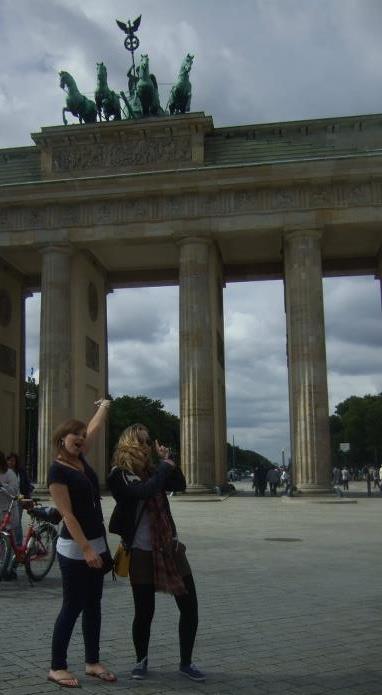
They work on tips alone, a fiver per head seems to be the going rate as opposed to the twelve euro bus audio tour. You join forces with a guide who speaks your  mother tongue, making things a whole lot easier. The route covers all the main locations including the Brandenburg gates, the Reichstag, the holocaust memorial, Checkpoint Charlie, the Berlin Wall, the scene of Goebbels book burning etc, etc. Another plus, you are bound to make friends, international friends that you can invite out on the raz that coming night.